
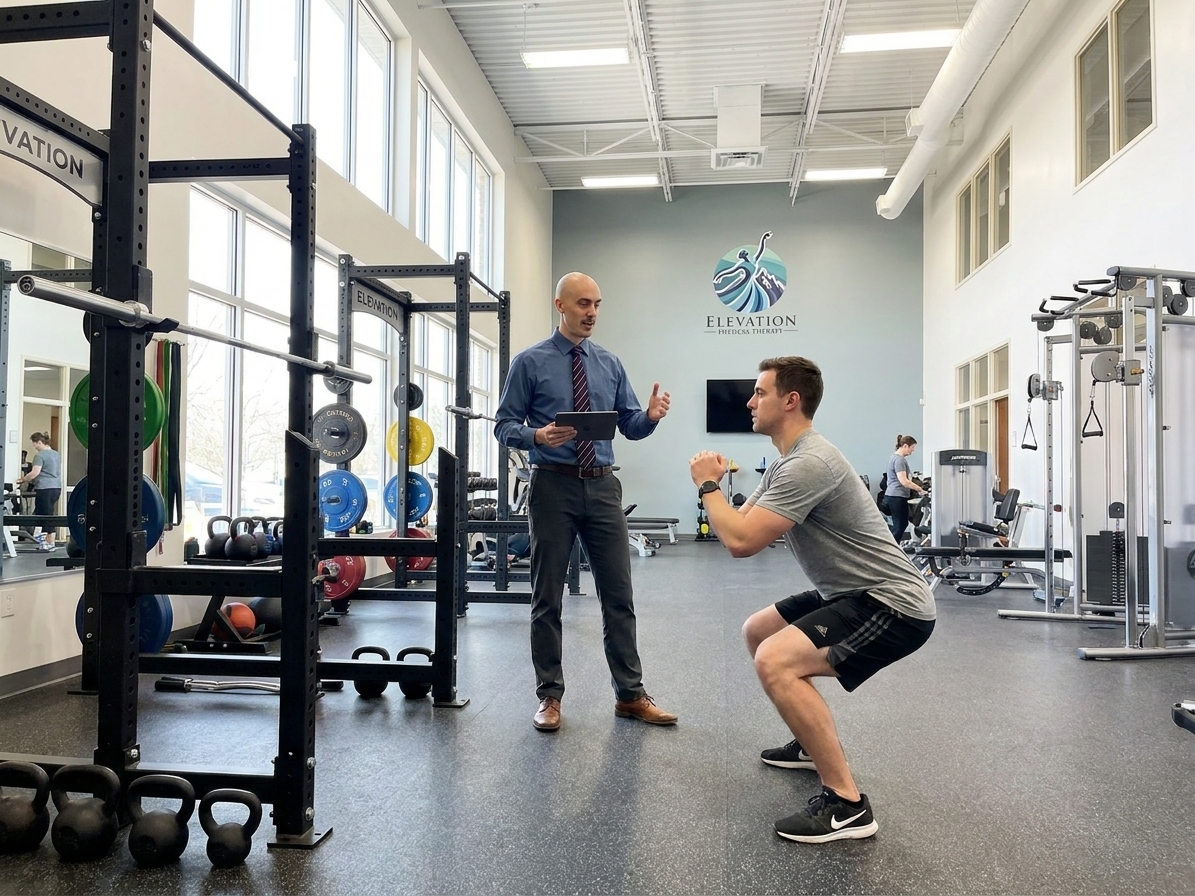
Dealing with an injury is frustrating. Whether it is a nagging hip impingement or a sudden ankle sprain, the first question on your mind is almost always: how long until I can get back to what I love? You want to know when you can return to the field, the trail, or your morning run without that sharp twinge of pain holding you back.
At Elevation Physical Therapy, based in Lebanon, NJ, we believe that question deserves an honest, individualized answer—not a vague estimate. Here is a breakdown of how long physical therapy typically takes for common injuries, and what makes the difference between a slow recovery and a fast one.
The Short Answer: It Depends on Several Key Factors
Physical therapy timelines are not one-size-fits-all. Recovery time is influenced by:
- The severity and type of your injury
- How long you have been dealing with it before seeking treatment
- Your overall physical condition and movement quality
- How consistently you attend sessions and do your home program
- Whether your care is individualized or generic
With that context in mind, here are realistic timelines for some of the injuries we commonly see.
Common Injuries and Physical Therapy Timelines
Acute Sprains and Strains: 4 to 8 Weeks
A grade one or two ankle sprain, hamstring strain, or wrist sprain typically responds well to focused physical therapy within four to eight weeks. The key is starting early, restoring full range of motion, and reloading the tissue progressively so it heals strong rather than weak.
At Elevation PT, we do not spend the first two weeks just icing and resting. We get you moving immediately in ways your body can tolerate, which accelerates healing and reduces the likelihood of re-injury.
Overuse Injuries: 6 to 12 Weeks
Conditions like Achilles tendinopathy, runner's knee, and IT band syndrome typically stem from overuse and underlying biomechanical issues. These injuries often take six to twelve weeks to resolve because the goal is not just pain relief—it is addressing why the tendon became irritated in the first place. Through a running gait analysis and functional movement assessment, we identify faulty movement patterns and loading strategies that keep the tissue from healing. Once those are corrected, the injury resolves and stays resolved.
Post-Surgical Rehab: 3 to 6 Months or More
ACL reconstruction, rotator cuff repair, and hip labral surgery all require structured, phased rehabilitation. At Elevation PT, we do not rush return-to-sport after surgery. We use objective testing—strength ratios, hop tests, movement screens—to determine readiness rather than relying on a calendar. Most patients reach full return-to-activity between three and six months, though highly dynamic sports may take longer.
Chronic Pain and Recurring Injuries: Varies Widely
Chronic low back pain, persistent shoulder tightness, or recurring knee pain that has been present for months or years is more complex to treat. Recovery timelines vary significantly based on the root cause. Some patients see dramatic improvement within four to six weeks once the underlying driver is identified. Others need longer-term programming to retrain movement habits and build the capacity to handle their training loads.
What Makes Physical Therapy Faster or Slower?
In our experience, two things accelerate recovery more than anything else:
- Starting treatment early. The longer an injury is left untreated, the more compensation patterns develop and the more tissue quality degrades. Early intervention almost always shortens overall timelines.
- One-on-one care that addresses the root cause. Generic PT slows recovery because it treats symptoms rather than causes. At Elevation PT, every session is sixty minutes of focused, individualized treatment—no aides, no juggling multiple patients, no cookie-cutter protocols.
Realistic Expectations for Your Recovery
At Elevation Physical Therapy in Lebanon, NJ, we understand that uncertainty is one of the hardest parts of any recovery. You deserve a clear roadmap and a proactive, performance-focused approach that gets you moving confidently again.
After your evaluation, we will give you a realistic timeline based on your specific injury, your goals, and your body—not a generic estimate from the internet. If you are ready to stop guessing and start recovering, reach out to schedule a free discovery call.
